Golden oak is one of the hardest woods to paint well — tannins can bleed through ordinary paint and the open grain shows. Here is how degreasing, sanding, a stain-blocking bonding primer, grain filling and a sprayed 2K topcoat fix it.
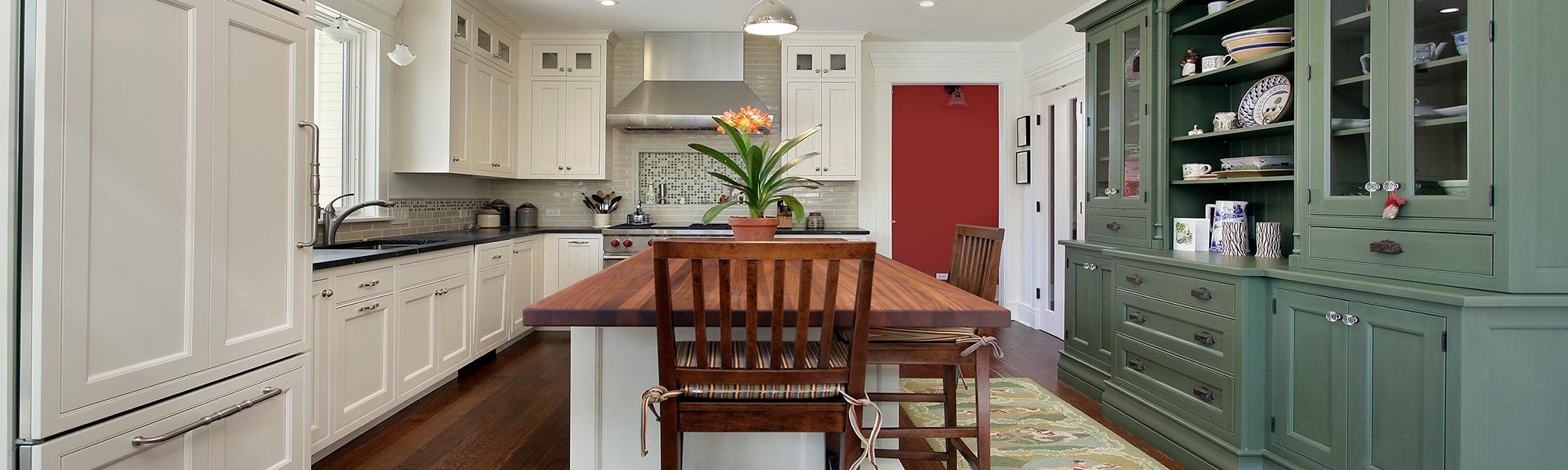
Golden oak was in almost every kitchen built a generation ago, and it is one of the hardest woods to paint well. Oak is open-grained, and its tannins — the natural compounds in the wood — can bleed through ordinary paint and show up as yellowish or brownish stains in the finish. A coat of regular paint over golden oak often looks fine for a short while, then the tannin bleed shows through.
Tannins in oak can migrate through paint that is not made to block them. That is why a stain-blocking primer matters — it seals the wood so the tannins cannot reach the topcoat.
Oak has a deep, open grain. Painted straight over, the grain pattern still shows. Grain filling smooths the surface first, giving the modern, flat finish most homeowners want.
Kitchen cabinets collect years of cooking grease. Paint will not stick to a greasy surface, so deep degreasing comes before anything else.
Everything around the cabinets is masked off, and the oak is deep-cleaned so grease and grime cannot stop the paint from bonding.
The wood is sanded dust-free, and the grain is filled where a smooth finish is wanted. This is the step that makes oak look like new, flat cabinetry instead of painted-over grain.
A stain-blocking bonding primer seals in the tannins and gives the topcoat something to grip. Skipping this step is how tannin bleed happens.
The finish is a sprayed 2K enamel topcoat — Sherwin-Williams Gallery Series or Benjamin Moore Advance — applied with HVLP and airless equipment for zero brush marks. The whole job takes 3–5 days and the kitchen stays usable.
If your cabinets are solid oak in good shape, painting them — with grain filling and a stain-blocking primer — is one of the best-value kitchen updates there is. See our oak cabinet makeovers page and our process, or get a free written estimate for your kitchen. Back to the blog index.
Tannins are natural compounds in oak that can bleed through ordinary paint and appear as yellowish or brownish stains in the finish. A stain-blocking bonding primer seals the wood so tannins cannot reach the topcoat.
Grain filling is optional, but it is what gives oak a smooth, modern finish. Without it, the wood grain pattern still shows through the paint.
A sprayed 2K enamel topcoat — Sherwin-Williams Gallery Series or Benjamin Moore Advance — applied with HVLP and airless equipment, so there are zero brush marks.
No pressure, no obligation. Free written estimates and free color consulting — call or send the 30-second form and we will respond promptly with honest pricing.
