Dated golden and honey oak cabinets are our most common makeover in Lane County. With deep degreasing, dustless sanding, stain-blocking bonding primer, and optional grain filling, we turn dark, dated oak into bright, modern cabinetry — sprayed smooth, with zero brush marks.
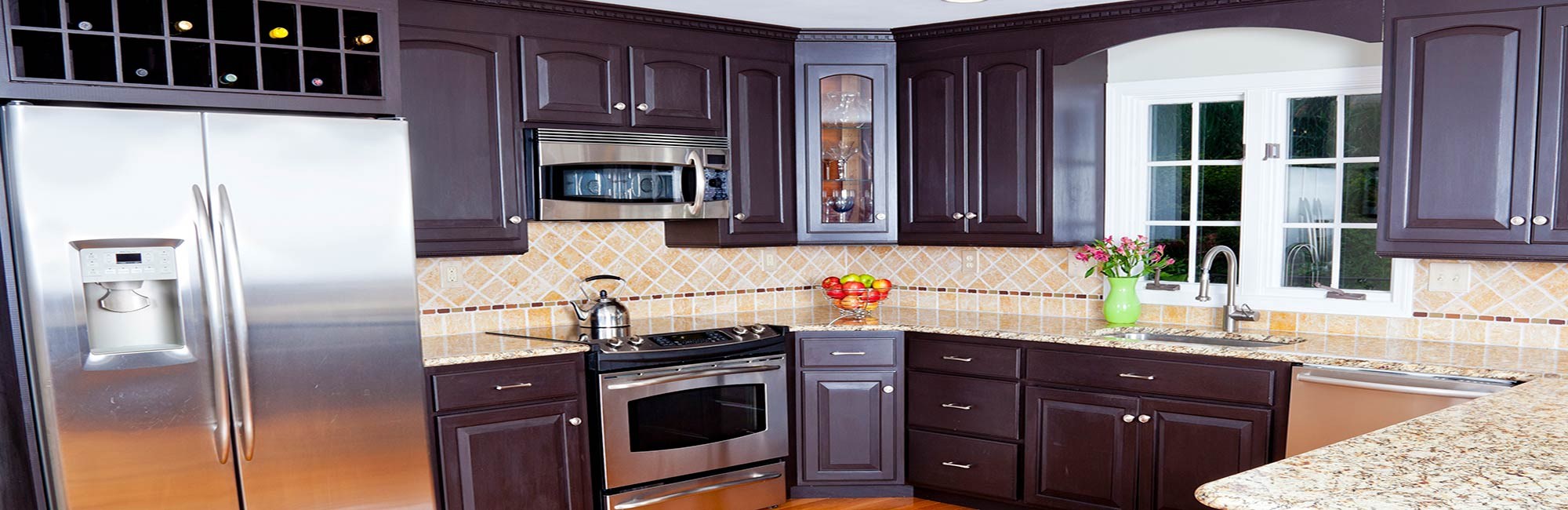
Golden oak and honey oak cabinets from the 1980s and 1990s are everywhere in Lane County — and they are the cabinets most homeowners want to change.
That warm honey-oak color was standard for decades, but it reads dark and dated next to today’s bright whites, soft greiges, and deep greens and navies. Paint — not replacement — is what changes it.
Oak has deep, open grain. Painted straight over, the grain telegraphs through and the finish still looks like oak. Our process sands the surface and offers optional grain filling for a smooth, modern, factory look.
Oak contains tannins that migrate up through ordinary paint and primer, leaving yellow and brown stains in a fresh white finish. A stain-blocking bonding primer is what stops it — step 3 of our process, never skipped.
Most oak cabinets are solid, well-built boxes. Painting them saves 60–75% compared with a full tear-out remodel, and most projects range from $2,800–$6,500. The cabinets stay; only the look changes.
The same 4-step factory-grade process, with the oak-specific steps — tannin-blocking primer and grain filling — doing the heavy lifting.
Doors, drawers, and hardware come off and are labeled. The kitchen is masked off and every surface is scrubbed free of years of cooking oils and wax that keep paint from bonding.
We mechanical-sand every surface for maximum tooth, repair dings, caulk seams, and fill the open oak grain when a smooth modern look is desired.
High-build stain-blocking primer locks wood tannins into the oak so yellow bleed-through never reaches the topcoat — and bonds permanently to the wood.
Multiple coats of KCMA-rated 2K polyurethane or catalyzed cabinet enamel, fine-sprayed with HVLP and airless equipment for a smooth, hard finish with zero brush marks.
Oak is the worst candidate for a quick brush-and-roll job — and the most common one we are called in to fix.
Brush strokes and roller stipple. Oak’s open grain catches and holds brush marks, and a roller leaves stipple across every door. Sprayed fine-finish equipment is the only way to a smooth, factory look.
Tannin bleed-through. Ordinary primer and wall latex do not block oak tannins. Within weeks or months, yellow and brown stains migrate through a fresh white finish — the most common reason a DIY oak paint job has to be redone.
Soft paint that peels. Standard wall latex softens from hand oils and peels around handles and hinges, often within 1 to 2 years. Our sprayed 2K polyurethane and catalyzed coatings are hard, washable, and KCMA-rated for cabinet use.
Learn more about the full service on our kitchen cabinet painting page, or see what cabinet painting costs and how it compares with replacing your cabinets.
Yes! Dated golden oak and honey oak cabinets are our most common makeover in Lane County. We deep-degrease, sand, apply stain-blocking bonding primer to stop tannin bleed, and offer optional wood grain filling before spraying our factory-grade topcoat.
Not when the prep is done right. Oak tannins can bleed yellow through ordinary paint, which is why we spray a high-build stain-blocking bonding primer that locks the tannins into the wood before any topcoat goes on.
That is your choice. Oak has open grain, and some homeowners like a hint of it showing through. If you want a completely smooth, modern look, we offer optional wood grain filling before priming and spraying.
Most kitchen cabinet painting projects take just 3 to 5 days from start to finish, and you can continue using your kitchen appliances and sink during the process.
No pressure, no obligation. Free written estimates and free color consulting — call or send the 30-second form and we will respond promptly with honest pricing.
